Th 4:00-6:50 (BMH 101)
Prof. Stewart Donovan
sdonovan@stu.ca
Office 307 EC Hall
Office hours: Tuesday 4:00-6:00, Wednesday 1:00-3:00 and Thursday 1:00-3:00 or by appointment.
Course Syllabus (2019)
Description
This course is an introduction to Art Cinema, its origins, trends and place in the world of film.
Evaluation
(1) Essay 20% (2) Journal (40%)
Final exam/ take home or in-class essay: 40%
First assignment:
For your essay, you must compare and contrast at least two films watched in class with two or more films of your own choosing. Remember, you will be judged on the films you choose so choose wisely. Your paper is due on October 17h. There are two deadlines for this paper: the first deadline October 17th is for students wishing for feedback on their papers. The second deadline is the end of term.There is NO PENALTY for the second deadline. Your paper should be between 6 and 8 typed pages double spaced. You may submit your papers to me on-line but YOU MUST confirm that I have received them and can access them.
Journal
A more informal style of writing, your journal should record notes from class, conversations with fellow students, family, friends et. al. about cinema and its cultural impact. The journal/notebook should also highlight research you have been doing: reading and viewing you will have done in the library or on the net. This is the independent learning section of the course. There is a large section of Art House cinema in our library and students are expected to become familiar with some of them. Students with access to Netflicks will find a good selection there as well. You will be expected to write reviews and summaries of their themes, plots, performances and style and to make comparisons with other films you have seen. You should try to write/ compose at least three entries per week. The length of these entries depends on your writing skills, but try to avoid point form. Set a goal of one to two pages per week. Remember that the journal is also a writing and communicating exercise. Do not fear the blank page, as no one learns how to write well overnight. You must, however, try to critique the celebrity culture that has largely been the background of your movie-going experience. Try to step back from it and critique its negative qualities while appraising the merits of film and film culture in general.
NOTE: Students should be aware that the staff at our writing centre are there to help you with your writing skills.The Writing Centre offers one-on-one assistance to students at all stages of the writing process, from planning an essay to polishing a final draft. Students are eligible for up to two 50-minute appointments per week, availability permitting. Students book appointments online at http://writingcentre.stu.ca. During appointments, students will meet with staff who are highly skilled and experienced in university-level writing. Since the goal of the Writing Centre is to help students improve their own writing, Writing Centre staff are not permitted to make direct changes to students’ papers, or influence the ideas in the paper. Instead, staff will carefully read students’ writing, ask students questions about their intentions, and advise students on how best to improve their essay structure, use of sources, grammar, etc. Students who need help understanding course content should consult with a peer tutor. Please note that the Writing Centre does not assist with take-home exams.
NOTE: The Journal is to be handed in on the exam day in December.
Exam
You may do your final exam as a take home or as an in-class open book essay. You will be given 6 or more questions on the last day of classes from which you will choose two questions and write two essays from four to six typed pages in length. All take homes are due on the day of the exam. Only a legitimate excuse from the Registrar’s office will be accepted for late exams or papers at the end of term.
Attendance
Attendance is mandatory. Students who miss more than three classes without an excuse from the Registrar will be awarded a Golden F by the academy.
Texts and Films
There will be a series of class handouts both paper and digital.Students should also consult professor Donovan’s web page for the course. Note: some films may be subject to change.
Recommended Texts, On-line sites and resources.
The New Biographical Dictionary of Film by David Thomson's
Students should read a brief history/ Outline of Art House Cinema on –line or from one of the many introduction to film books in our library: the tastes often vary as to which films are superior, but most historians and critics agree on who gets into the club, so to speak. Many cinephiles might accept as a truism that art house film was simply a reaction to the commercialization of art and the commodification of culture that Hollywood was intent on from the beginning with its unholy alliance of American laissez-faire capitalism and art. While this reductionism does speak to a wider truth about the general nature of our popular culture, the mass medium, and the culture industry, there are some pitfalls in its generalizations, not least of which, for our purposes, is the fact that many great works of classic art house film have come out of the Hollywood studio system. We need only mention most of the films of Orson Welles and many of the movies of Alfred Hitchcock to make our point. It can be argued of course that these were accidents or subversive works of art disguised as mainstream entertainment. Some American critics have argued that Hollywood absorbed most of what art cinema had to offer when it first made its cultural impact in the 1940’s 50s and 60s through national (though foreign) movements such as Italian neo-realism, French new wave and Czech new wave to mention a few.
The websites of International film festivals are usefull for information and historical survey and summary. There are hundreds of film festivals world wide but the most influential are: Toronto (to be a Homer about it), Sundance ( Robert Redford), Venice, Berlin, and the grandmother of them all, Cannes whose database goes back to 1946 http://www.festival-cannes.fr/ . The British Film Institute (BFI) is interesting and has some good resources but they can also be goofy so be careful. http://www.bfi.org.uk The most exhaustive, and much of the best, film hisotry and criticism is now on line and even a site as commercial as IMDB will lead you to a vast amount of material. Don't be afraid to read some of the everyday bloggers on a film you are interested in but absolutely beware of the absolute. In English written criticism, Roger Ebert was a great voice of commonsense and almost infallible taste when it came to cinema. There is a moving tribute to him on the Charlie Rose show by Werner Herzog, one of the world's greatest auteurs. You can find it at the Slate site: http://www.slate.com/blogs/browbeat/2013/04/09/roger_ebert_remembered_on_charlie_rose_watch_werner_herzog_a_o_scott_and.html
Peter Bradshaw at The Guardian on line is one of the better "daily" and "popular" critics writng today. Salon.com is also very good. Rotten Tomatoes, though like IMDB highly commerical, also has some good intro criticism, but remeber that these sights have neither the time nor inclination to get into any academic or scholarly discussion of film. The most talked about, and one of the most influential, Europen philosopers of modern times is Slavoj Zizek. This Croatian born polymath is also a cinefile ( by this stage of the game we have hopefully gone past buff). Be warned though, he is, first and foremost a political/cultural critic so he can be drawn to a cinema whose artistic merits might seem a little on the thin side. See, for example, his discussion of conspiracy films like the Manchurain Candidate in his Living in the End Times. I bring Zizek in here to make the point that no intellectual can egage the contemporay world of culture without reference to cinema. Furthermore, it seems to be a truism that the best of art cinema has an edge that goes beyond entertainment to both politics and art.
Topics and Lectures
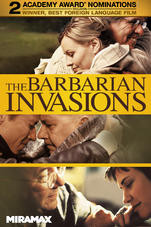
1. The Barbarian Invasions, Deny Arcand
2. Volver, Pedro Almodovar
3. La Promesse by Luc and Jean-Pierre Dardenne; Thou Shalt Not Steal (from the Decalogue) by Krysztof Kieslowski.
4. Incendies, Denis Villeneuve
5. StoryTelling/Happiness, Todd Soldenz
6. The Secret in Her Eyes
7. The Double Life of Veronica, Kieslowski
8. Nosferatu, Herzog
9. Dogville, Lars Von Trier
10. The Man Without A Past, Aki Kaurismaki
11. Tsotsi, Athol Fugard
12. Hell or High Water
13 Reprise,
14 Princes Mononoke,
News
Contact
· • sdonovan@stu.ca
· • (506) 452-0426
Th 4:00-6:50 (BMH 101)
Prof. Stewart Donovan
sdonovan@stu.ca
Office 307 EC Hall
Office hours: Tuesday 4:00-6:00, Wednesday 1:00-3:00 and Thursday 1:00-3:00 or by appointment.
Course Syllabus (2019)
Description
This course is an introduction to Art Cinema, its origins, trends and place in the world of film.
Evaluation
(1) Essay 20% (2) Journal (40%)
Final exam/ take home or in-class essay: 40%
First assignment:
For your essay, you must compare and contrast at least two films watched in class with two or more films of your own choosing. Remember, you will be judged on the films you choose so choose wisely. Your paper is due on October 17h. There are two deadlines for this paper: the first deadline October 17th is for students wishing for feedback on their papers. The second deadline is the end of term.There is NO PENALTY for the second deadline. Your paper should be between 6 and 8 typed pages double spaced. You may submit your papers to me on-line but YOU MUST confirm that I have received them and can access them.
Journal
A more informal style of writing, your journal should record notes from class, conversations with fellow students, family, friends et. al. about cinema and its cultural impact. The journal/notebook should also highlight research you have been doing: reading and viewing you will have done in the library or on the net. This is the independent learning section of the course. There is a large section of Art House cinema in our library and students are expected to become familiar with some of them. Students with access to Netflicks will find a good selection there as well. You will be expected to write reviews and summaries of their themes, plots, performances and style and to make comparisons with other films you have seen. You should try to write/ compose at least three entries per week. The length of these entries depends on your writing skills, but try to avoid point form. Set a goal of one to two pages per week. Remember that the journal is also a writing and communicating exercise. Do not fear the blank page, as no one learns how to write well overnight. You must, however, try to critique the celebrity culture that has largely been the background of your movie-going experience. Try to step back from it and critique its negative qualities while appraising the merits of film and film culture in general.
NOTE: Students should be aware that the staff at our writing centre are there to help you with your writing skills.The Writing Centre offers one-on-one assistance to students at all stages of the writing process, from planning an essay to polishing a final draft. Students are eligible for up to two 50-minute appointments per week, availability permitting. Students book appointments online at http://writingcentre.stu.ca. During appointments, students will meet with staff who are highly skilled and experienced in university-level writing. Since the goal of the Writing Centre is to help students improve their own writing, Writing Centre staff are not permitted to make direct changes to students’ papers, or influence the ideas in the paper. Instead, staff will carefully read students’ writing, ask students questions about their intentions, and advise students on how best to improve their essay structure, use of sources, grammar, etc. Students who need help understanding course content should consult with a peer tutor. Please note that the Writing Centre does not assist with take-home exams.
NOTE: The Journal is to be handed in on the exam day in December.
Exam
You may do your final exam as a take home or as an in-class open book essay. You will be given 6 or more questions on the last day of classes from which you will choose two questions and write two essays from four to six typed pages in length. All take homes are due on the day of the exam. Only a legitimate excuse from the Registrar’s office will be accepted for late exams or papers at the end of term.
Attendance
Attendance is mandatory. Students who miss more than three classes without an excuse from the Registrar will be awarded a Golden F by the academy.
Texts and Films
There will be a series of class handouts both paper and digital.Students should also consult professor Donovan’s web page for the course. Note: some films may be subject to change.
Recommended Texts, On-line sites and resources.
The New Biographical Dictionary of Film by David Thomson's
Students should read a brief history/ Outline of Art House Cinema on –line or from one of the many introduction to film books in our library: the tastes often vary as to which films are superior, but most historians and critics agree on who gets into the club, so to speak. Many cinephiles might accept as a truism that art house film was simply a reaction to the commercialization of art and the commodification of culture that Hollywood was intent on from the beginning with its unholy alliance of American laissez-faire capitalism and art. While this reductionism does speak to a wider truth about the general nature of our popular culture, the mass medium, and the culture industry, there are some pitfalls in its generalizations, not least of which, for our purposes, is the fact that many great works of classic art house film have come out of the Hollywood studio system. We need only mention most of the films of Orson Welles and many of the movies of Alfred Hitchcock to make our point. It can be argued of course that these were accidents or subversive works of art disguised as mainstream entertainment. Some American critics have argued that Hollywood absorbed most of what art cinema had to offer when it first made its cultural impact in the 1940’s 50s and 60s through national (though foreign) movements such as Italian neo-realism, French new wave and Czech new wave to mention a few.
The websites of International film festivals are usefull for information and historical survey and summary. There are hundreds of film festivals world wide but the most influential are: Toronto (to be a Homer about it), Sundance ( Robert Redford), Venice, Berlin, and the grandmother of them all, Cannes whose database goes back to 1946 http://www.festival-cannes.fr/ . The British Film Institute (BFI) is interesting and has some good resources but they can also be goofy so be careful. http://www.bfi.org.uk The most exhaustive, and much of the best, film hisotry and criticism is now on line and even a site as commercial as IMDB will lead you to a vast amount of material. Don't be afraid to read some of the everyday bloggers on a film you are interested in but absolutely beware of the absolute. In English written criticism, Roger Ebert was a great voice of commonsense and almost infallible taste when it came to cinema. There is a moving tribute to him on the Charlie Rose show by Werner Herzog, one of the world's greatest auteurs. You can find it at the Slate site: http://www.slate.com/blogs/browbeat/2013/04/09/roger_ebert_remembered_on_charlie_rose_watch_werner_herzog_a_o_scott_and.html
Peter Bradshaw at The Guardian on line is one of the better "daily" and "popular" critics writng today. Salon.com is also very good. Rotten Tomatoes, though like IMDB highly commerical, also has some good intro criticism, but remeber that these sights have neither the time nor inclination to get into any academic or scholarly discussion of film. The most talked about, and one of the most influential, Europen philosopers of modern times is Slavoj Zizek. This Croatian born polymath is also a cinefile ( by this stage of the game we have hopefully gone past buff). Be warned though, he is, first and foremost a political/cultural critic so he can be drawn to a cinema whose artistic merits might seem a little on the thin side. See, for example, his discussion of conspiracy films like the Manchurain Candidate in his Living in the End Times. I bring Zizek in here to make the point that no intellectual can egage the contemporay world of culture without reference to cinema. Furthermore, it seems to be a truism that the best of art cinema has an edge that goes beyond entertainment to both politics and art.
Topics and Lectures
1. The Barbarian Invasions, Deny Arcand
2. Volver, Pedro Almodovar
3. La Promesse by Luc and Jean-Pierre Dardenne; Thou Shalt Not Steal (from the Decalogue) by Krysztof Kieslowski.
4. Incendies, Denis Villeneuve
5. StoryTelling/Happiness, Todd Soldenz
6. The Secret in Her Eyes
7. The Double Life of Veronica, Kieslowski
8. Nosferatu, Herzog
9. Dogville, Lars Von Trier
10. The Man Without A Past, Aki Kaurismaki
11. Tsotsi, Athol Fugard
12. Hell or High Water
13 Reprise,
14 Princes Mononoke,
News
Contact
· • sdonovan@stu.ca
· • (506) 452-0426